Artists & Brands

ERNST Max

image Germany
1891 - 1976
11 lots
image ERNST Max

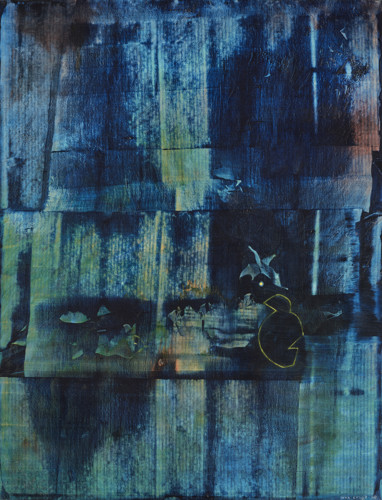
Max Ernst (1891–1976) was a German-born artist and one of the most influential figures in Surrealism and Dada. Born in Brühl, Germany, he studied philosophy and psychology before turning to art, experiences that later shaped his fascination with dreams, the unconscious, and irrational imagery. After serving in World War I, Ernst became a founding member of the Cologne Dada group. In the 1920s, he moved to Paris and joined the Surrealists, developing innovative techniques such as frottage (rubbing textures onto paper), grattage (scraping paint), and decalcomania. These methods allowed chance and subconscious processes to guide his work, producing strange, dreamlike landscapes and hybrid creatures. Ernst’s art often combines precise detail with fantastical elements, challenging traditional perceptions of reality. His recurring motifs include birds, forests, and mysterious figures, reflecting his personal symbolism. With the outbreak of World War II, Ernst emigrated to the United States, where he influenced the emerging Abstract Expressionist movement. He later returned to Europe, settling in France. Over his long career, he worked in painting, sculpture, collage, and printmaking. Today, Max Ernst is celebrated as a pioneer who expanded the boundaries of artistic imagination and experimental technique.

image Le monde est une fable (Le temps est un songe)
Le monde est une fable (Le temps est un songe)
PaintingOil1960
Sold For
$254,000
May 2026MAX ERNST (1891-1976)| Le monde est une fable (Le temps est un songe) | signed 'max ernst' (lower right); signed again, titled and dedicated 'Le monde est une fable à Raymond Loewy. max ernst' (on the reverse)| oil on canvas| 25 3⁄8 x 21 ¼ in. (64.5 x 54 cm.)| Painted in 1960|
image Paysage jaune
Paysage jaune
PaintingOil1960
Sold For
€96,000
April 2026Max Ernst|Paysage jaune|Property from a Prestigious European Collection|1891-1976|signed max ernst (lower right)|oil on panel|24,1 x 33,2 cm; 9½ x 13⅛ in.|Executed circa 1960.
image Simplicity
Simplicity
UncategorizedOil1960
Sold For
€330,200
October 2025Max Ernst (1891-1976)| Simplicity| signé et daté 'max ernst 60' (en bas à droite); signé, daté et inscrit 'Simplicity max ernst 1960' (au revers)|huile et grattage sur toile|116 x 89.2 cm.|Peint à Huismes en 1960| |signed and dated 'max ernst 60' (lower right); signed, dated and inscribed 'Simplicity max ernst 1960' (on the reverse)|oil and grattage on canvas|45 5⁄8 x 35 1⁄8 in.|Painted in Huismes in 1960|
image Le soleil sur terre
Le soleil sur terre
UncategorizedOil1960
Sold For
£76,200
October 2025MAX ERNST (1891-1976)| Le soleil sur terre | signed 'max ernst' (lower right)| oil and décalcomanie on paper| 9 7⁄8 x 7 1⁄8 in. (25 x 18 cm.)| Painted in 1960|
image Der abwaschbare Priesterkragen
Der abwaschbare Priesterkragen
Uncategorized1960
Sold For
€1,280
March 2024MAX ERNST (1891-1976) | Der abwaschbare Priesterkragen | |signé dans la planche 'Max Ernst' (en bas à droite) ; dédicacé à Man Ray 'To Man from Max' (au revers)|Offset en noir réhaussé au crayon gras de couleur sur vélin et réalisé d'après le collage intitulé « le col du prêtre »|Exécuté circa 1960|signed in the plate 'Max Ernst' (lower right) ; dedicated to Man Ray 'To Man from Max' (on reverse)|Offset in black with coloured oily stick highlights on vellum, based on the collage entitled « le col du prêtre »|Executed circa 1960|15 x 12.3 cm. |5 7/8 x 4 13/16 in.
image La nature à l'aurore
La nature à l'aurore
Uncategorized1975
Sold For
$27,720
May 2023AFTER A DESIGN BY MAX ERNST (1891-1976)| La nature à l'aurore | with signature 'max ernst' and the Yvette Cauquil-Prince monogram (in the weave, lower left); signed by the master weaver, numbered and titled 'Yvette Cauquil-Prince 0/1 Nature at Dawn' (on a label attached to the reverse)| hand-woven wool tapestry| 77 1/2 x 105 3/8 in. (197 x 267.5 cm.)| Executed in 1975|
image Soudain II
Soudain II
PaintingOil1960
Sold For
€147,000
June 2015Max Ernst (1891 - 1976) | Soudain II | oil on panel | 24.2 x 33.3 cm ; 9 1/2 x 13 1/8 in. | The fantastic quality and the opulence of colour Ernst witnessed in the mountains and deserts of the American West during the 1940s and early 1950s made a strong impression on him, and he continued to incorporate the aesthetic of desert moonrises and sunsets in the compositions completed after he returned to France. The works that he completed during these years evidence the artist's renewed optimism triggered by Europe's post-war recovery, and the present work can be interpreted in this spirit. In this richly colourful composition, Ernst employs the technique of grattage that he had created during the early days of the Surrealist movement. This process is most evident near the sharp edges delineating where the palette knife had smoothed and scraped the wet paint, sometimes revealing a darker colour beneath the top layer of pigment. As is the case for the present work, Ernst's paintings of the post-war era exhibited a stylistic duality of composition and disintegration - a suitable metaphor for the times.
image Moon II
Moon II
PaintingOil1944
Sold For
£338,500
June 2014Max Ernst (1891 - 1976) | Moon II | oil on canvas | 66 by 80cm. | 26 by 31 1/2 in. | Moon II belongs to a series of nocturnal landscapes that Ernst executed in 1944, inspired by his stay in Arizona the previous summer. The fantastic quality and the opulence of colour he witnessed in the mountains and deserts of the American West made a strong impression on the artist, and are beautifully rendered in the present work in a richly layered composition and a kaleidoscopic colouration. Whilst Ernst executed a number of paintings showing the landscape bathed in bright sunshine (fig. 1), it was in his nocturnal pictures, such as Moon II, that he managed to capture the sublime magic of his surroundings. Ernst and Dorothea Tanning spent the summer of 1943 in Arizona, and Werner Spies described the ranch where they stayed as 'a marvellous spot on the bank of a creek that, fed by the glaciers of the San Francisco Mountains, came rushing down through a canyon (a kind of replica of the Grand Canyon on a human scale) to lose itself in the burning deserts to the south. The first fascinating thing about the place was its abundance of colour [...]. Then there were the rock formations, which resembled a great variety of things' (W. Spies, Max Ernst, A Retrospective (exhibition catalogue), Tate Gallery, London, 1991, p. 323). Discussing Ernst's works inspired by these surroundings, John Russell wrote: 'Arizona offered isolation, a celestial climate, a way of life that was both economical and free from suburban constraints. It offered the inspiration of supreme, natural beauty [...] Few things are more stirring than the fantastic forms and the irrational colouring of the mountains around Sedona. In the mid-1940s life and landscape in that region had an uncorrupted quality which made of Arizona a Promised Land in which a new life could be begun and an old one discarded [...] and although Max Ernst had never been a landscape painter, in the ordinary sense, it was deeply moving for him to come upon a landscape which had precisely the visionary quality that he had sought for on canvas' (J. Russell, Max Ernst: Life and Work, New York, 1967, p. 140).
image
PaintingOil1960
Sold For
£52,500
February 2014Max Ernst (1891-1976) Le soleil sur terre signed ´max ernst´ (lower right) oil on paper 10½ x 8½ in. (27 x 22 cm.) Painted in 1960
image Composition, lune et soleil
Composition, lune et soleil
PaintingOil1960
Sold For
£97,250
February 2011Max Ernst (1891 - 1976) | Composition, lune et soleil | oil on panel | 35.3 by 26.7cm., 13 7/8 by 10 1/2 in. | By 1960 Max Ernst was at the height of his artistic powers. Throughout his career Ernst's creative passion continously drove him to explore new forms of expression. In the late 1910s and early 1920s, he immersed himself in the founding of the Dada protest movement, and later in the decade was at the core of Surrealism. He continued his free exploration into new techniques such as frottage and grattage while living in America during World War II, powerfully influencing the post-war American Abstract Expressionist artists in New York. Ernst returned to Paris in the early 1950s with his spirit of optimism renewed by Europe's post-war recovery. Composition, lune et soleil was executed in this spirit and at a time when Ernst's earlier themes intersected with his incredibly modern and post-modern, artistic sensibility. Astronomy was a central focus for Ernst during this period. He was magnetically drawn to the romanticism of the unknown, a notion that had sparked much of his artistic exploration. In 1964 Ernst would publish Maximiliana au l'Exercice illégal de l'astronomie - a series of illustrations in hommage to the great nineteenth-century astronomer, Ernst Wilhelm Leberecht Tempel. Werner Spies writing about the parallels between Ernst biography and the artist's own life described how 'in the spirals and mists of Tempel's nebulae, he discerned the romantic worldview expressed in Breton's term "explosante-fixe." In his hommage to Tempel, Ernst drew together and united threads of Dada protest and the Surrealist's triumph over violence' (Nightmare and Deliverence, Max Ernst: a Retrospective, Metropolitan Museum of Art, New York, 2005, p. 18). The present work provides a stunning demonstration of the astronomical concepts that captivated Max Ernst during these years.
image LE XXE SIÈCLE or VERSATILITY
LE XXE SIÈCLE or VERSATILITY
PaintingOil1960
Sold For
£826,900
February 2008Max Ernst (1891-1976) | LE XXE SIÈCLE or VERSATILITY | oil on canvas | 97 by 130cm. | 38 1/8 by 51 1/8 in. | In this monumental work, Ernst presents a highly abstracted vision of a landscape evaporating into a kaleidoscopic haze. Ernst had returned to Paris from America in the early 1950s with a renewed optimism triggered by Europe's post-war recovery, and the present work can be interpreted in this spirit. When he painted Le XXe siècle in 1960-61, Ernst employed the technique of grattage that he had created during the early days of the Surrealist movement. But now his paintings exhibited a stylistic duality of composition and disintegration - a suitable metaphor for the times. According to Werner Spies, his mood during this period 'was an ambivalent one, which [Ernst] paraphrased as follows: "From 'The Age of Anxiety' to 'The Childhood of Art' only half a rotation of the orthochromatic wheel is required. Between the Massacre of the Innocents and Stepping Through the Looking-Glass lies an interval merely of one luminous night." ... Ernst remained true to his early decision to strive for a symbolic painting in which open questions, and hence the unfathomable obscurity of existence, took precedence over simplistic positivist explanations and definitive stylistic results' (W. Spies, Max Ernst, A Retrospective (exhibition catalogue), London, 1991, p. 252). This painting relates to an earlier version of the same subject from 1955 (fig. 1), around the time the artist settled down in France after an intermittent, decade-long hiatus in Arizona with Dorothea Lang. The fantastic quality and the opulence of colour Ernst witnessed in the mountains and deserts of the American West during the 1940s and early 1950s made a strong impression on him, and he continued to incorporate the aesthetic of desert moonrises and sunsets in the compositions completed after he returned to France. Grattage was first developed by Ernst in the mid-1920s as a painterly response to the Surrealist concept of automatism. Grattage is a development in oil paint of frottage, the technique Ernst first employed in pencil and paper: 'One rainy day in 1925 Ernst was first inspired to explore the possibilities of frottage by the look of the grooves in the well-scrubbed floor of his hotel room at the seashore in Pornic. Attracted by the open structure of the grain, he rubbed it, using paper and pencil, and then reinterpreted the results. As he developed the procedure, he used a variety of new elements to start with - stale bread crumbs, grained leather, striated glassware, a straw hat, twine - always transforming the results so that whatever lay beneath his paper experienced a metamorphosis. The characteristics of these objects got lost in the process. Unrefined textures turned into more precise shapes. The grain of wood became the tossing surface of the sea, the scaly pattern of the weave of a straw hat became a cypress tree, the texture of twine became another kind of grain even a horse. At first Ernst carried out his rubbings with paper and pencil. Soon, however, he began to explore new effects obtained by pursuing grattage, a variant of frottage executed in the medium of painting. In grattage, objects are placed beneath a surface covered with a thin layer of pigment, which the artist scrapes away with a spatula or palette knife... these works are sensual and tactile, with images of rubbed objects that appear as ghostly traces of form' (W. Spies, 'Nightmare and Deliverence' in Max Ernst: A Retrospective (exhibition catalogue), New York, 2005, pp. 12-13). This work has been requested for the exhibition Max Ernst, Dream and Revolution: A Retrospective, to be held at Moderna Museet, Stockholm and Louisiana Museum, Humlebæk from September 2008 until February 2009.

You've reached the end of the results

Total: 11 lots
An unhandled error has occurred. Reload 🗙