Artists & Brands

ERNST Max

image Germany
1891 - 1976
22 lots
image ERNST Max

Max Ernst (1891–1976) was a German-born artist and one of the most influential figures in Surrealism and Dada. Born in Brühl, Germany, he studied philosophy and psychology before turning to art, experiences that later shaped his fascination with dreams, the unconscious, and irrational imagery. After serving in World War I, Ernst became a founding member of the Cologne Dada group. In the 1920s, he moved to Paris and joined the Surrealists, developing innovative techniques such as frottage (rubbing textures onto paper), grattage (scraping paint), and decalcomania. These methods allowed chance and subconscious processes to guide his work, producing strange, dreamlike landscapes and hybrid creatures. Ernst’s art often combines precise detail with fantastical elements, challenging traditional perceptions of reality. His recurring motifs include birds, forests, and mysterious figures, reflecting his personal symbolism. With the outbreak of World War II, Ernst emigrated to the United States, where he influenced the emerging Abstract Expressionist movement. He later returned to Europe, settling in France. Over his long career, he worked in painting, sculpture, collage, and printmaking. Today, Max Ernst is celebrated as a pioneer who expanded the boundaries of artistic imagination and experimental technique.

image Le monde est une fable (Le temps est un songe)
Le monde est une fable (Le temps est un songe)
PaintingOil1960
Sold For
$254,000
May 2026MAX ERNST (1891-1976)| Le monde est une fable (Le temps est un songe) | signed 'max ernst' (lower right); signed again, titled and dedicated 'Le monde est une fable à Raymond Loewy. max ernst' (on the reverse)| oil on canvas| 25 3⁄8 x 21 ¼ in. (64.5 x 54 cm.)| Painted in 1960|
image Paysage jaune
Paysage jaune
PaintingOil1960
Sold For
€96,000
April 2026Max Ernst|Paysage jaune|Property from a Prestigious European Collection|1891-1976|signed max ernst (lower right)|oil on panel|24,1 x 33,2 cm; 9½ x 13⅛ in.|Executed circa 1960.
image Ohne Titel
Ohne Titel
PaintingOil1933
Sold For
£63,500
March 2026MAX ERNST (1891-1976)| Ohne Titel | signed 'max ernst' (lower right)| gouache and oil on paper| 9 x 12 1⁄8 in. (23 x 30.8 cm.)| Executed circa 1933|
image Simplicity
Simplicity
UncategorizedOil1960
Sold For
€330,200
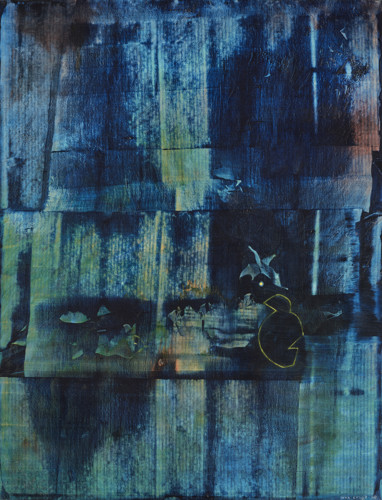
October 2025Max Ernst (1891-1976)| Simplicity| signé et daté 'max ernst 60' (en bas à droite); signé, daté et inscrit 'Simplicity max ernst 1960' (au revers)|huile et grattage sur toile|116 x 89.2 cm.|Peint à Huismes en 1960| |signed and dated 'max ernst 60' (lower right); signed, dated and inscribed 'Simplicity max ernst 1960' (on the reverse)|oil and grattage on canvas|45 5⁄8 x 35 1⁄8 in.|Painted in Huismes in 1960|
image Le soleil sur terre
Le soleil sur terre
UncategorizedOil1960
Sold For
£76,200
October 2025MAX ERNST (1891-1976)| Le soleil sur terre | signed 'max ernst' (lower right)| oil and décalcomanie on paper| 9 7⁄8 x 7 1⁄8 in. (25 x 18 cm.)| Painted in 1960|
image La Horde
La Horde
PaintingOil1927
Sold For
€0
September 2024Max Ernst (1891-1976)| La Horde| signé ‘max ernst’ (en bas à gauche)| huile sur toile| 46.5 x 38.8 cm.| Peint en 1927|signed 'max ernst' (lower left)|oil on canvas| 18 3⁄8 x 15 ¼ in. |Painted in 1927|
image Der abwaschbare Priesterkragen
Der abwaschbare Priesterkragen
Uncategorized1960
Sold For
€1,280
March 2024MAX ERNST (1891-1976) | Der abwaschbare Priesterkragen | |signé dans la planche 'Max Ernst' (en bas à droite) ; dédicacé à Man Ray 'To Man from Max' (au revers)|Offset en noir réhaussé au crayon gras de couleur sur vélin et réalisé d'après le collage intitulé « le col du prêtre »|Exécuté circa 1960|signed in the plate 'Max Ernst' (lower right) ; dedicated to Man Ray 'To Man from Max' (on reverse)|Offset in black with coloured oily stick highlights on vellum, based on the collage entitled « le col du prêtre »|Executed circa 1960|15 x 12.3 cm. |5 7/8 x 4 13/16 in.
image La nature à l'aurore
La nature à l'aurore
Uncategorized1975
Sold For
$27,720
May 2023AFTER A DESIGN BY MAX ERNST (1891-1976)| La nature à l'aurore | with signature 'max ernst' and the Yvette Cauquil-Prince monogram (in the weave, lower left); signed by the master weaver, numbered and titled 'Yvette Cauquil-Prince 0/1 Nature at Dawn' (on a label attached to the reverse)| hand-woven wool tapestry| 77 1/2 x 105 3/8 in. (197 x 267.5 cm.)| Executed in 1975|
image Forêt
Forêt
Uncategorized1927
Sold For
€653,800
October 2021Max Ernst|Forêt|1891 - 1976|signed max ernst (lower right)|gouache on paper|50,1 x 64,5 cm; 19¾ x 25⅜ in.|Executed in 1927.|_____________________________________________________________|signé max ernst (en bas à droite)|gouache sur papier|Exécuté en 1927.
image Jeune homme traversant une rivière prenant par la main une jeune fille et en bousculant une autre
Jeune homme traversant une rivière prenant par la main une jeune fille et en bousculant une autre
PaintingOil1927
Sold For
£539,250
February 2020Max Ernst (1891-1976)| Jeune homme traversant une rivière prenant par la main une jeune fille et en bousculant une autre| signed 'max ernst' (lower right)| oil on canvas| 18 7/8 x 15 1/8 in. (47.8 x 38.3 cm.)| Painted in 1927|
image La mariée du vent
La mariée du vent
PaintingOil1927
Sold For
£662,500
February 2016Max Ernst (1891-1976)| La mariée du vent | signed 'max ernst' lower right| oil on canvas| 28¾ x 36¼ in. (73 x 92 cm.)| Painted in 1927|
image Soudain II
Soudain II
PaintingOil1960
Sold For
€147,000
June 2015Max Ernst (1891 - 1976) | Soudain II | oil on panel | 24.2 x 33.3 cm ; 9 1/2 x 13 1/8 in. | The fantastic quality and the opulence of colour Ernst witnessed in the mountains and deserts of the American West during the 1940s and early 1950s made a strong impression on him, and he continued to incorporate the aesthetic of desert moonrises and sunsets in the compositions completed after he returned to France. The works that he completed during these years evidence the artist's renewed optimism triggered by Europe's post-war recovery, and the present work can be interpreted in this spirit. In this richly colourful composition, Ernst employs the technique of grattage that he had created during the early days of the Surrealist movement. This process is most evident near the sharp edges delineating where the palette knife had smoothed and scraped the wet paint, sometimes revealing a darker colour beneath the top layer of pigment. As is the case for the present work, Ernst's paintings of the post-war era exhibited a stylistic duality of composition and disintegration - a suitable metaphor for the times.
An unhandled error has occurred. Reload 🗙